



The 2025 Ballon d’Or ceremony has just wrapped up, and the headlines belong to one man: Ousmane Dembélé. The Paris Saint-Germain star was officially crowned the best soccer player in the world. For him, it’s a career-defining moment. But for others, like Barcelona’s Pedri and Bayern Munich’s Harry Kane, the night might have felt a little unfair. After all, both had incredible seasons but didn’t even crack the top 10.
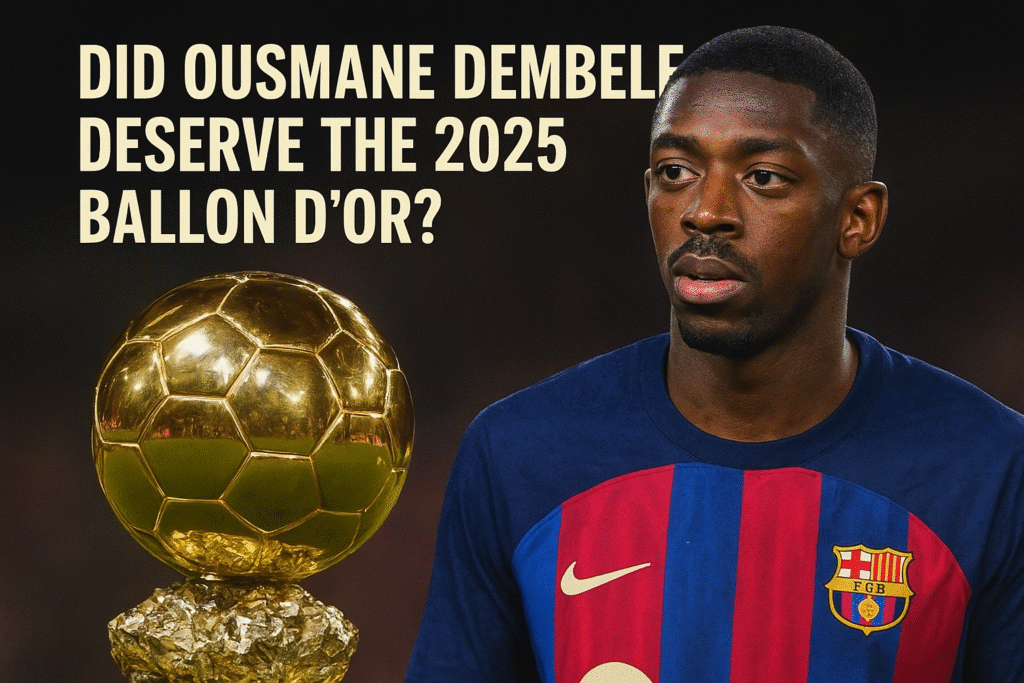
This brings up a big question many fans are asking: Did Ousmane Dembélé really deserve to win the Ballon d’Or?
To figure that out, let’s break down what the award is all about, what the main competition looked like, and why this year’s debate is one of the most heated in recent memory.
What Is the Ballon d’Or?
The Ballon d’Or (French for “Golden Ball”) is soccer’s most famous individual award. It’s been around since 1956, and legends like Lionel Messi, Cristiano Ronaldo, and Zinedine Zidane have all held it. The winner is chosen by journalists, national team coaches, and captains who vote every year.
The official criteria for voters includes three things:
Individual performances – how decisive and impressive a player is.
Team performances and achievements – trophies, titles, and how much the player helped his team win.
Class and fair play – respect, sportsmanship, and professionalism.
Sounds simple, right? Well, not exactly. Every year, fans and players argue about the choices, because there’s no fixed point system. That means a lot comes down to interpretation and sometimes even politics. For example, last year’s winner, Rodri, wasn’t even nominated in 2025. That’s the first time in history a defending Ballon d’Or holder didn’t make the list!
Pedri: The Midfield Maestro Left Out
One of the biggest shocks was Barcelona’s Pedri not making the top 10. That’s crazy when you look at his numbers.
Minutes played: 4,643 across all competitions
Passes completed: 3,647 out of 4,090 (over 88% accuracy)
Possessions won: 389
Goals: 6
Assists: 8
Not only did Pedri play almost every possible game, but he was also key in Barcelona winning a domestic treble (La Liga, Copa del Rey, and Spanish Super Cup). He was the heartbeat of the team, much like Xavi and Iniesta used to be. But just like them, Pedri might never touch the Ballon d’Or if voters keep ignoring midfielders who do the “dirty work.”
Raphinha: Barcelona’s Captain Marvel
Another Barca star who had a huge year was Raphinha, and at least he made it into the top five. His numbers were jaw-dropping:
Total goals + assists (G/A): 56 (34 goals, 22 assists)
Champions League contributions: 21 (tying Cristiano Ronaldo’s all-time record)
Captaincy: Stepped up as leader when needed
Defensive work: Won possession 142 times and made 22 interceptions
Raphinha’s performances in big games like El Clásico and in the Champions League showed he’s more than just a flashy winger. He became a leader, a fighter, and one of the most productive players in Europe. And yet, fifth place feels a little low for those numbers.
Harry Kane: Goals, but Still Not Enough
Then there’s Harry Kane. The England captain finally lifted the first trophy of his career with Bayern Munich and finished the season with 41 goals and 11 assists. That’s an incredible haul, but voters only placed him at No. 13.
Why so low? Probably because Bayern only won the Bundesliga, a title they’re almost expected to win every year. Without a Champions League run, Kane’s goals weren’t enough to push him higher in the Ballon d’Or standings. It’s harsh, but this award often favors Champions League heroes.
Ousmane Dembélé
The Teen Wonder: Lamine Yamal
On the opposite wing to Raphinha at Barcelona, Lamine Yamal was the breakout star of 2024/25. At just 18 years old, he put up numbers that would be impressive for any world-class forward:
Goals: 18
Assists: 21
Chances created: 90
Ball recoveries: 207
Interceptions: 29
He played with the kind of magic on the ball that fans haven’t really seen since a young Lionel Messi. His ability to change games, create highlight moments, and produce consistent stats made him a genuine Ballon d’Or contender.
Still, Ousmane Dembélé’s Champions League win with PSG might have tipped the scales. History shows us that the Ballon d’Or often goes to players whose clubs lift Europe’s biggest trophy. Yamal can’t be too upset, though. He won the Kopa Trophy (best young player in the world) for the second year in a row.
Ousmane Dembélé
So Why Ousmane Dembélé?
Now let’s get back to the man of the moment. Ousmane Dembélé had an outstanding season with Paris Saint-Germain, finally fulfilling the potential many thought he had years ago.
Here’s why voters backed him:
Trophies: Ligue 1, French Cup, French Supercup, and Champions League (a quadruple!)
Consistency: Performed in both domestic and European competitions
Big game impact: Stepped up in crucial Champions League matches, helping PSG finally win the trophy they’ve been chasing for over a decade
Style: Fast, skillful, and creative — he lit up matches in a way few players could
When you combine the stats, the trophies, and the magic moments, Ousmane Dembélé checked all three official criteria boxes. He was decisive, he led PSG to their best-ever season, and he carried himself with class.
Ousmane Dembélé
The Bigger Picture: Why the Ballon d’Or Is Always Debated
Soccer fans love to debate, and the Ballon d’Or is the ultimate conversation starter. Should goals matter more than assists? Should trophies matter more than individual brilliance? Should midfielders get more love?
This year’s ceremony highlighted all those questions again. Pedri fans are frustrated. Raphinha supporters think he was robbed. Kane backers can’t believe 41 goals only got him 13th. And Yamal’s admirers are already predicting he’ll win multiple Ballons d’Or in the future.
But in the end, history will only remember one thing: 2025 was Ousmane Dembélé’s year.
Final Thoughts
Was Ousmane Dembélé a deserving winner? Looking at his trophy haul and influence on PSG’s historic season, it’s hard to argue against him. Sure, Pedri, Raphinha, Yamal, and Kane all had amazing campaigns. But when you win four major trophies, including the Champions League, while delivering consistent performances, you’ve got a strong case to be called the best player in the world.
Soccer is about opinions, and that’s what makes awards like the Ballon d’Or so fascinating. Some years feel obvious (like Messi in 2012), while others feel controversial. 2025 will go down as one of those heated years — but also as the year when Ousmane Dembélé finally became a global superstar.