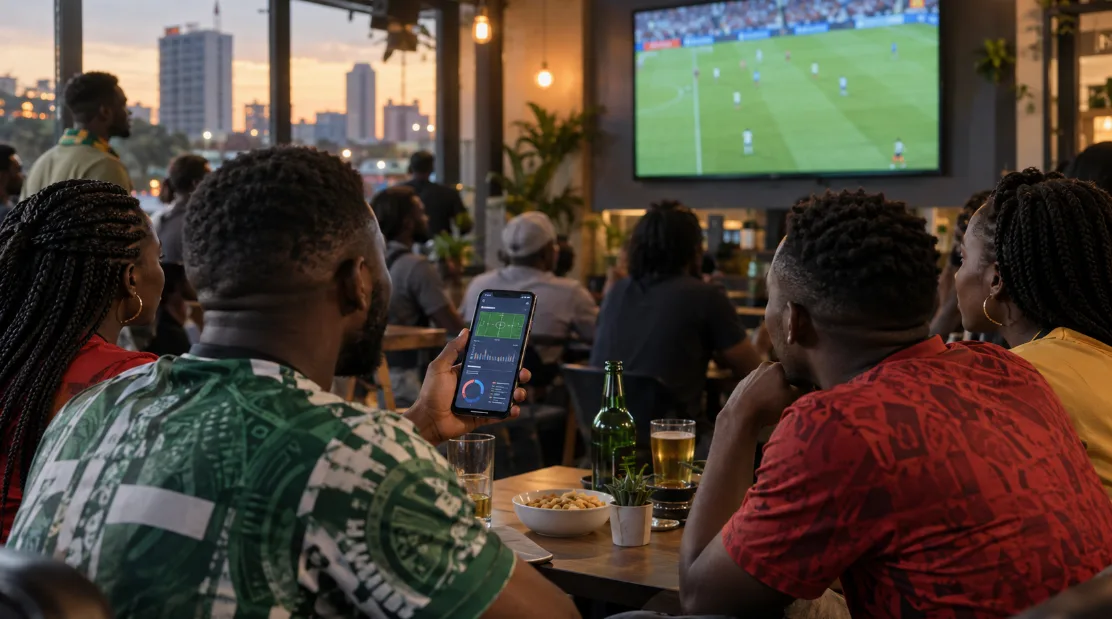
Sports betting has become a visible part of the wider sports industry in many African countries. Its growth has taken place alongside the expansion of mobile internet, digital payments and online sports coverage.
Football remains the main focus of betting activity across much of the continent. International competitions attract large audiences, particularly the English Premier League, UEFA Champions League and other major European leagues. Domestic competitions, national teams and CAF tournaments also generate considerable interest.
Although the general trend can be seen across Africa, the industry does not operate in the same way everywhere. Each country has its own regulations, payment systems, popular sports and betting habits.
The Influence of Mobile Technology
The increased availability of affordable smartphones has changed how people access sports information. Supporters can now follow live scores, check team news and view match statistics from almost any location.
The same technology has made online betting more accessible. Instead of visiting a physical betting shop, users can create an account, deposit funds and select markets through a mobile website or application.
Mobile payment services have played an important role in this development. They are already widely used for everyday transactions in several African countries, making them a practical option for deposits and withdrawals.
However, the most common payment method varies by market. Mobile money is particularly important in some countries, while bank cards, transfers and digital wallets are more widely used in others. This is one reason betting platforms often adapt their services to individual countries.
Different Markets Across the Continent
Africa cannot be viewed as a single betting market. Regulations and licensing requirements differ between countries, as do taxes and the number of operators permitted to offer their services.
Language is another important factor. Sports and betting content is published in English across many markets, while French and Portuguese are essential in other parts of the continent. Local terminology and sporting preferences can also influence how information is presented.
Resources such as AXN sports betting organise sports news, betting guides and operator information around individual African markets. This type of local structure allows readers to find material that is more closely connected to the competitions, payment options and services available in their own country.
The sports being covered can also differ. Football is generally the largest category, but cricket has a significant following in countries such as South Africa and Zimbabwe. Rugby, basketball, athletics and netball also attract audiences in particular regions.
Sports Information and Betting Data
The availability of detailed sports data has changed the way supporters examine matches. Information that was once difficult to obtain is now commonly included on sports websites and mobile applications.
This can include recent results, home and away form, head-to-head records, player availability and league standings. Live matches may also be accompanied by possession figures, shots, corners and disciplinary statistics.
Betting markets have developed alongside this increase in data. In addition to selecting a match winner, users can find markets involving total goals, both teams to score, corners, cards and individual player performances.
The amount of available information does not determine the result of a sporting event, but it allows readers to understand the teams and the available markets in greater detail.
Regulation and National Authorities
Sports betting is generally regulated at a national level. Relevant authorities may issue licences, establish operating requirements and determine how betting activity is taxed.
Because these rules are set by individual countries, an operator licensed in one jurisdiction is not automatically authorised to accept customers in another. Requirements may also change as governments update legislation to reflect the growth of digital services.
Regulation can cover areas such as advertising, identification checks, data protection, payment processing and the minimum legal age for participation. The precise rules depend on the country and its existing legal framework.
At the continental level, the African Union works on broader priorities including economic integration, digital development, youth, sport and cooperation between member states. It does not serve as a single betting regulator for Africa, but its wider programmes provide useful context for understanding how digital industries are developing across the continent.
The Relationship Between Betting and Sports Media
Betting and sports media have become increasingly connected. Many sports websites now display odds alongside fixtures or publish guides explaining different markets. Betting companies are also visible through club sponsorships, league partnerships and advertising during sports broadcasts.
At the same time, sports coverage extends far beyond betting. Match reports, interviews, transfer news and tactical analysis continue to form the basis of most sports publications.
For publishers operating in this area, local expertise is useful. Writers familiar with a particular country are more likely to understand which leagues are followed, how supporters access matches and what information readers consider relevant.
This has contributed to the development of sports websites aimed specifically at African audiences rather than relying entirely on international coverage.
An Industry That Continues to Evolve
The development of sports betting in Africa is closely linked to wider changes in technology and media. Improved internet access has made sports information easier to obtain, while mobile payments have allowed digital services to reach a broader audience.
Future growth is likely to differ from one country to another. Changes in legislation, payment technology and consumer habits will continue to influence how each market develops.
What is already clear is that African sports audiences are becoming more connected. Supporters now have access to a wider range of competitions, statistics and locally produced coverage than they did a decade ago.
Sports betting forms one part of that changing landscape. Understanding it requires looking at local regulations, technology, media and sporting culture rather than treating the continent as one uniform market.